
Earth is full of wonders, but some locations seem so surreal that they defy explanation. From gravity-defying formations to hidden worlds, these places make you question reality and remind us how strange and unpredictable nature can be.
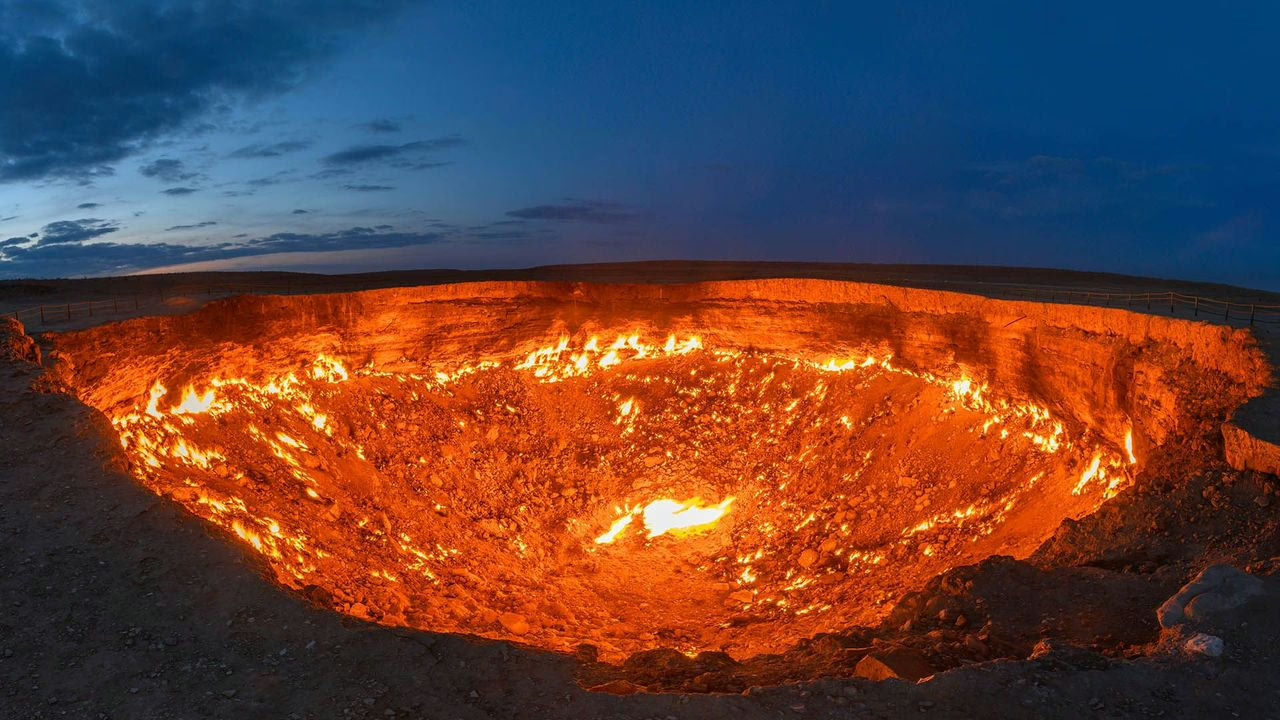
The Door to Hell, Turkmenistan
In the Karakum Desert, a fiery crater known as the Door to Hell has been burning continuously for over 50 years. In 1971, Soviet geologists accidentally tapped into an underground natural gas cavern, causing it to collapse and catch fire. They expected the flames to burn out in a few weeks, but the crater has continued to blaze ever since. At night, it looks like a portal to another world, with glowing orange flames lighting up the desert. Its sheer surrealism makes it one of the most inexplicable sites on Earth.
Socotra Island, Yemen
Socotra Island is often called the “most alien-looking place on Earth.” Its dragon blood trees, which resemble umbrellas, and unique flora and fauna make the island look like a scene from a sci-fi movie. More than a third of the island’s plant species exist nowhere else on the planet. Socotra’s isolation from the mainland has allowed evolution to take strange, almost otherworldly paths, creating landscapes and ecosystems that seem impossible yet undeniably real.
The Door to the Underworld: Lake Natron, Tanzania
Lake Natron, in northern Tanzania, is a deadly-looking alkaline lake that turns animals into calcified statues. Its high pH and salt content create a red-hued surface that looks like it belongs on Mars. Birds and fish that die in the lake are preserved as eerie, stone-like sculptures. Despite appearing lifeless, the lake supports specialized microbes and flamingos that nest on its edges, showing how life can exist in the most hostile environments.
Salar de Uyuni, Bolivia
The world’s largest salt flat, Salar de Uyuni, covers over 4,000 square miles. During the rainy season, it transforms into a mirror, reflecting the sky so perfectly that it’s impossible to tell where the earth ends and the sky begins. The natural phenomenon seems impossible, yet it occurs every year. Photographers, travelers, and scientists alike are mesmerized by this flat, endless mirror, where walking feels like floating through the clouds.
The Catacombs of Paris, France
Beneath Paris lies a labyrinth of tunnels filled with millions of human bones. Originally limestone quarries, the tunnels were repurposed to house the remains of those exhumed from overcrowded 18th-century cemeteries. Walking through these eerily arranged bones, some stacked in artistic patterns, feels surreal, like entering a city of the dead. The catacombs are a macabre testament to history and urban ingenuity, yet their sheer scale makes them almost unbelievable.
Mount Roraima, Venezuela/Brazil/Guyana
Mount Roraima is a flat-topped plateau that rises sharply above the jungle below. Its sheer cliffs and tabletop summit have inspired stories of lost worlds and mysterious civilizations. The plateau’s ecosystem is isolated, home to species found nowhere else on Earth. Its unique shape and hidden valleys create an otherworldly appearance, making it look like a floating island straight out of a fantasy novel.
Antelope Canyon, USA
In Arizona, Antelope Canyon is a narrow slot canyon carved by water over millions of years. Its twisting passageways, smooth rock walls, and beams of sunlight create scenes that look digitally rendered. The canyon feels alive, with walls that seem to move and shift as the sunlight shifts throughout the day. Its formation is a perfect combination of water, rock, and time, a place that feels almost impossible to exist naturally.
Conclusion
These places challenge our understanding of reality. They demonstrate the Earth’s capacity for extreme beauty, survival, and mystery. Whether shaped by fire, water, isolation, or geological quirks, they seem to exist in defiance of reason. They remind us that our planet is far stranger than most people will ever experience firsthand, and that nature can create landscapes that border on the impossible.