
Early one morning, park ranger Travis began his patrol through a remote section of the forest reserve he had worked in for several years. His role often involved checking trail conditions, monitoring wildlife activity, and ensuring that protected areas remained undisturbed. Most days followed a familiar rhythm, shaped by routine and long stretches of solitude.
On this particular patrol, however, something out of the ordinary caught his attention.
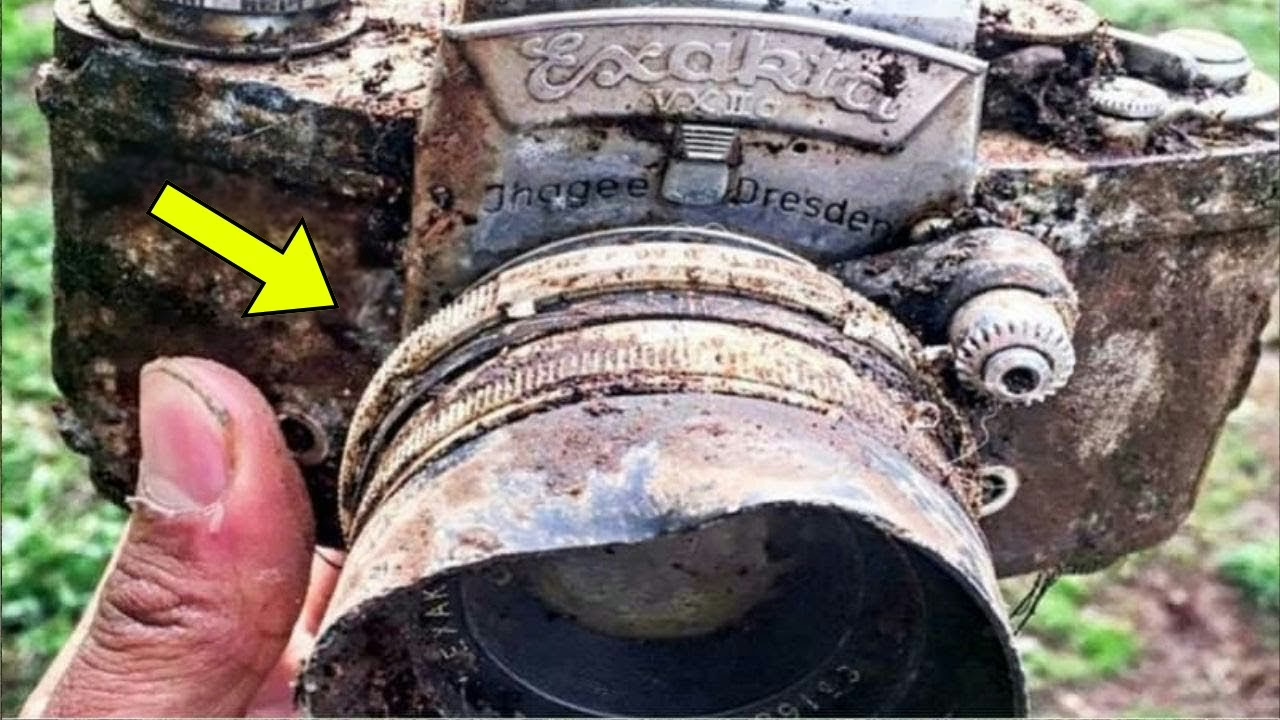
Near the edge of an overgrown clearing, partially hidden beneath fallen leaves and damp soil, Travis noticed a small metallic object reflecting light through the trees. Assuming it might be old litter or abandoned equipment, he stepped closer and carefully cleared away the debris.
What he uncovered was an old film camera.
The device was clearly not modern. Its casing showed signs of long exposure to the elements, and patches of moss clung to its edges. The lens was clouded but intact, suggesting it had been left undisturbed for many years. Travis immediately recognized that this was not something recently dropped by a visitor.
Signs of Earlier Human Activity
Curious about how the camera ended up there, Travis examined the surrounding area more closely. The clearing itself was subtle, easy to miss unless one knew where to look. The trees were spaced slightly wider apart, and the ground appeared more level than the surrounding forest floor.
As he moved through the area, additional details became apparent. There were stones arranged in rough circles that resembled old fire pits. Several logs had been positioned deliberately, likely used as seating. The remains of cleared paths hinted at temporary foot traffic rather than permanent construction.
These were not signs of neglect or damage. Instead, they suggested careful, low-impact use of the land many years earlier.
Recognizing the importance of preserving the site, Travis avoided disturbing anything further. He recorded the location, photographed the area for documentation, and placed the camera securely in his pack before returning to the ranger station.
A Camera From Another Era
Back at the station, Travis showed the camera to senior colleagues who had been working in the park for decades. Their reaction was immediate and thoughtful.
They recognized the model.
Before digital equipment became standard, rangers had used similar film cameras to document trail conditions, wildlife sightings, and environmental changes. Each camera had been cataloged and assigned through official records.
After consulting archived inventory logs, the team identified the camera as belonging to Evelyn, a former ranger who had worked in the park many years earlier.
According to personnel records, Evelyn had voluntarily left her position after several years of service. At the time, her departure was noted as a personal life decision. There were no reports of conflict, misconduct, or safety concerns associated with her exit.
Over time, her name faded from everyday conversation, becoming a small footnote in the park’s long history.
Preserving the Film
The discovery of undeveloped film inside the camera raised an important question: could the images still be recovered?
Travis contacted several photography labs, but most declined. The film was old, fragile, and potentially damaged. Eventually, he connected with a specialist experienced in restoring historical photographic materials.
With careful handling and patience, the film was developed.
Despite its age, several images were preserved well enough to be viewed clearly.
What the Images Revealed
The photographs provided a window into a time long past.
They showed a small group of individuals living temporarily within the forest. Canvas tents were arranged in a simple layout, with shared spaces for cooking and gathering. The structures were modest and designed to leave minimal impact on the land.
Some images captured people preparing meals, walking along forest paths, or sitting together in discussion. The tone of the photographs was calm and practical, focused on daily life rather than performance or display.
There was nothing secretive or inappropriate in the images. Everything appeared lawful, consensual, and respectful of the environment.
In many ways, the photographs resembled documentation of early conservation communities or educational retreats centered on environmental awareness.
Evelyn Comes Forward
When news of the recovered camera circulated internally, Evelyn herself reached out.
Now many years removed from her time as a ranger, she shared her story openly and willingly.
She explained that during her years working in the park, she developed a deep interest in sustainable living and environmental philosophy. While she valued her role as a ranger, she felt drawn toward learning directly from communities that practiced minimal-impact lifestyles.
After careful consideration, she chose to leave her position and spend time with a small group of individuals who shared those values. The decision was entirely her own, made without pressure or influence from others.
The group lived simply, moving locations periodically to avoid environmental strain. Over time, members naturally went their separate ways as life circumstances changed.
The camera, she said, had simply been forgotten during one of those transitions.
No Cause for Concern
Evelyn was clear in her explanation: there had been no danger, no misconduct, and no violation of law. The group’s activities were peaceful, environmentally focused, and temporary by nature.
What might have seemed unusual from a distance was, in reality, a personal journey shaped by curiosity, learning, and a desire to live more intentionally.
The forest had quietly absorbed the traces of that chapter, leaving only subtle signs behind.
A Different Way of Seeing the Forest
With the full story understood, the discovery took on a different meaning.
For Travis, the experience was a reminder that protected landscapes are not only shaped by natural forces but also by human choices made thoughtfully and respectfully. Not every trace of past activity signals a problem. Some reflect moments of learning, transition, and exploration.
Standing once more at the clearing, he noticed how thoroughly the forest had reclaimed the space. New growth had filled in old paths. Fallen leaves covered what little remained of human presence.
The camera’s rediscovery had not uncovered something alarming. Instead, it preserved a quiet story that might otherwise have been lost entirely.
Sometimes, the most meaningful discoveries are not about uncovering hidden threats, but about gaining perspective on how people seek connection with nature in different ways.
In that sense, the old camera had done exactly what it was meant to do: capture a moment in time, and allow it to be understood years later.