
Sometimes, history is not shaped by grand plans, brilliant strategies, or visionary leaders—it’s shaped by mistakes, accidents, or coincidences. These unintended actions often have ripple effects that change nations, discoveries, or even the course of civilization.
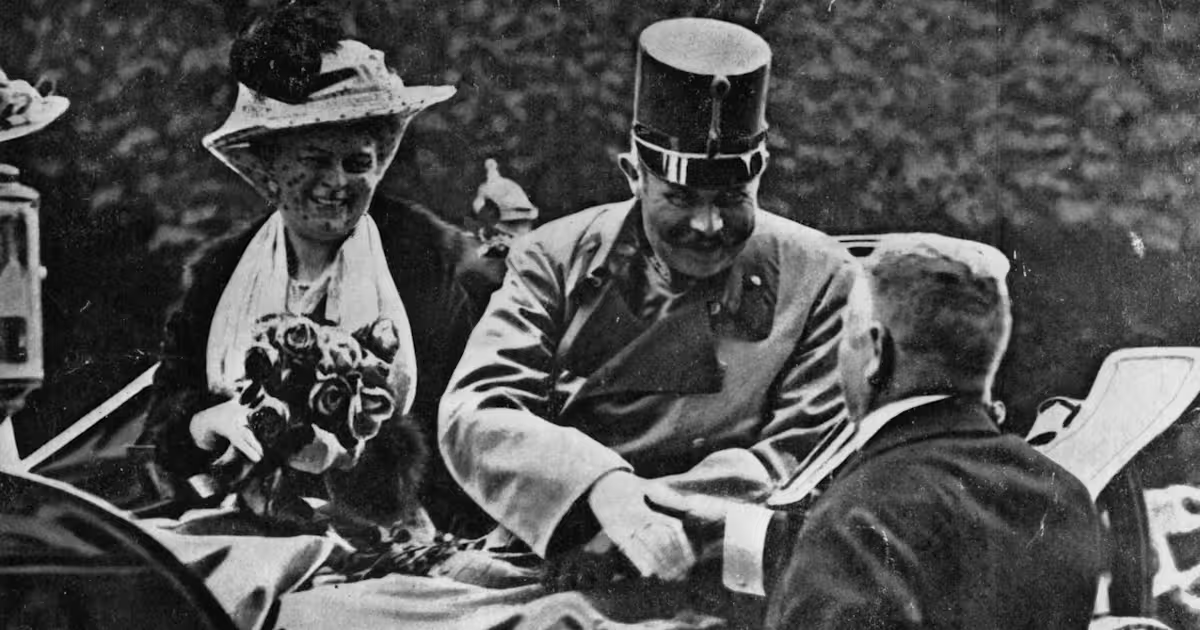
Archduke Ferdinand: A Wrong Turn
The assassination of Archduke Franz Ferdinand in 1914 is one of the most famous accidental events that changed history. The driver of the Archduke’s car took a wrong turn, unintentionally bringing him directly into the path of Gavrilo Princip, who shot him. This single, accidental misstep triggered World War I, a conflict that reshaped Europe, toppled empires, and set the stage for World War II. One wrong turn literally altered global history.
Alexander Fleming and Penicillin
In 1928, Alexander Fleming accidentally discovered penicillin when he noticed that mold had contaminated one of his bacterial cultures. The bacteria near the mold had died, revealing the antibiotic properties of Penicillium notatum. What was initially a lab mishap became one of the most important medical discoveries in history, saving millions of lives and changing the course of medicine forever.
The Explosion That Ended the War
During World War II, the Bombing of Hiroshima and Nagasaki might not have been accidental in execution, but a twist of fate—weather conditions and timing—allowed the bombings to cause maximum effect. Historians note that if the planes had been delayed or a storm had appeared, the outcome could have been significantly different, highlighting how small accidental variables shape monumental events.
The Coffee Bean That Changed Nations
Coffee was reportedly discovered by a goat herder named Kaldi in Ethiopia when he noticed his goats acting unusually energetic after eating certain berries. This accidental observation led to the cultivation of coffee, which would later fuel social, cultural, and economic revolutions across the globe—from coffeehouses where ideas were born to entire economies built on trade.
The Potato That Saved a Continent
Potatoes were introduced to Europe by accident, brought back by explorers from South America. Initially considered exotic or even poisonous, potatoes eventually became a staple crop, especially in Ireland and Northern Europe. Without this “accidental” introduction, famine and food scarcity would have taken an entirely different course.
The Newspaper That Sparked a Revolution
In 1776, a misprinted newspaper helped spread revolutionary ideas faster than intended. Exaggerations, mistranslations, or typos sometimes accelerated unrest or spread propaganda. Accidental dissemination of ideas has often had more influence than carefully planned campaigns, showing that human error can catalyze social change.
The Lost Map That Discovered America
Columbus was searching for India when he accidentally “discovered” the Americas in 1492. While he believed he had found a new trade route, the accidental landing reshaped history, leading to the European colonization of the New World. One navigational mistake changed the fate of entire continents.
Conclusion
History is filled with unintended heroes and accidental catalysts. These moments show that human mistakes can have consequences far beyond imagination, and sometimes, the most transformative events aren’t planned—they’re stumbled upon. Whether through missteps, miscalculations, or coincidences, accidents remind us that chance plays a significant role in shaping human civilization.