
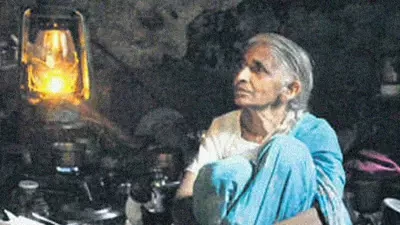
In our fast-paced, technology-driven world, it’s hard to imagine life without electricity, running water, smartphones, or even basic medical care. Yet throughout history—and even in modern times—humans have survived, thrived, and sometimes lived extraordinarily long lives without the conveniences we now consider essential. Their stories remind us that human resilience, adaptability, and ingenuity are far greater than we often realize.
The Man Who Lived Without Electricity
Before electricity became widespread, people relied on fire, candles, and natural light to guide their daily lives. However, some modern individuals have chosen—or been forced—to live entirely without electricity. One remarkable example is Shane McCarthy, a man living in rural Ireland who has spent decades living off-grid. He grows his own food, collects rainwater, and uses wood stoves for warmth.
Without refrigerators, heaters, or computers, Shane’s life revolves around natural rhythms. He rises with the sun, works with the seasons, and relies entirely on his own knowledge and labor. While outsiders might see this life as primitive, he reports a sense of freedom and connection to nature that modern living often lacks.
People Who Survived Without Modern Medicine
Long before vaccines, antibiotics, and hospitals, humans faced disease and injury with only traditional remedies, herbal knowledge, and sheer willpower. Indigenous communities around the world, such as the San people of the Kalahari Desert, lived for centuries without formal medical care. They relied on medicinal plants, spiritual healing, and a profound understanding of their environment to survive illnesses that today would require hospitalization.
Even in modern contexts, some isolated individuals have survived dangerous illnesses or injuries with minimal intervention. These cases highlight the body’s remarkable ability to heal and adapt when people lack access to modern medical systems.
The Hunter-Gatherers Who Never Needed Supermarkets
For most of human history, people survived as hunter-gatherers, moving with the seasons, hunting game, and foraging for plants. Tribes like the Hadza in Tanzania have lived this way for tens of thousands of years, maintaining health and physical fitness without supermarkets, processed food, or modern transportation.
The Hadza’s diet is entirely natural, consisting of meat, tubers, berries, and honey. Their daily lives include walking long distances, hunting, and gathering, which keep them strong and active. Anthropologists studying these communities have found remarkably low rates of chronic diseases common in modern societies, such as diabetes and heart disease. Their lives prove that survival without modern essentials is possible—and can even be healthier.
Children Raised Without Modern Technology
Perhaps one of the most striking examples of humans living without modern essentials comes from cases of feral children or children raised in extreme isolation. Some have been discovered living in forests or rural areas without contact with electricity, running water, or formal education.
One notable case is Victor of Aveyron, a French boy found in the late 18th century, who had lived alone in the forest for years. Despite his lack of socialization and modern care, Victor survived, learned basic language skills, and adapted to society after his discovery. These cases reveal that, while challenging, humans can survive even in extreme deprivation.
The Wisdom of Simple Living
Many modern people also deliberately choose to live without modern essentials. The voluntary simplicity movement encourages people to reduce reliance on technology, live off the land, and minimize consumption. Participants often report reduced stress, improved physical health, and a stronger sense of community.
Whether out of necessity or choice, these individuals demonstrate that human beings do not require modern luxuries to survive. Instead, they thrive through adaptability, resourcefulness, and a deep understanding of their environment.
Lessons from Lives Without Modern Essentials
Humans who live without modern conveniences teach several valuable lessons:
- Adaptability is Key: The human body and mind are remarkably flexible. People can adjust to harsh conditions, limited resources, and minimal technology if needed.
- Resourcefulness Matters: Survival often depends on knowledge of the environment, problem-solving, and practical skills rather than gadgets or machines.
- Connection to Nature Enhances Life: Many people who live without modern conveniences report a stronger bond with the natural world, reduced stress, and a simpler, more satisfying lifestyle.
- Modern Isn’t Always Better: While technology brings comfort, convenience, and safety, it is not strictly necessary for survival or fulfillment.
Conclusion
From hunter-gatherers in remote deserts to modern off-grid dwellers, humans have repeatedly demonstrated their ability to survive and even flourish without the modern essentials we take for granted. These stories are not just curiosities—they are reminders of the resilience, creativity, and adaptability that define our species.
By studying these individuals, we gain perspective on what truly matters for survival and well-being. In a world obsessed with technology and convenience, the lives of those who live without modern essentials inspire us to appreciate simplicity, resilience, and the enduring strength of human ingenuity.