
Global tourism is one of the world’s largest and most dynamic industries, contributing significantly to employment, economic development, and cultural exchange. However, the success of tourism is closely tied to political stability. Travelers are naturally drawn to destinations that are safe, predictable, and well-governed. Political stability influences everything from traveler confidence and investment to infrastructure development and international relations. As a result, it plays a critical role in shaping global tourism growth.
Understanding Political Stability
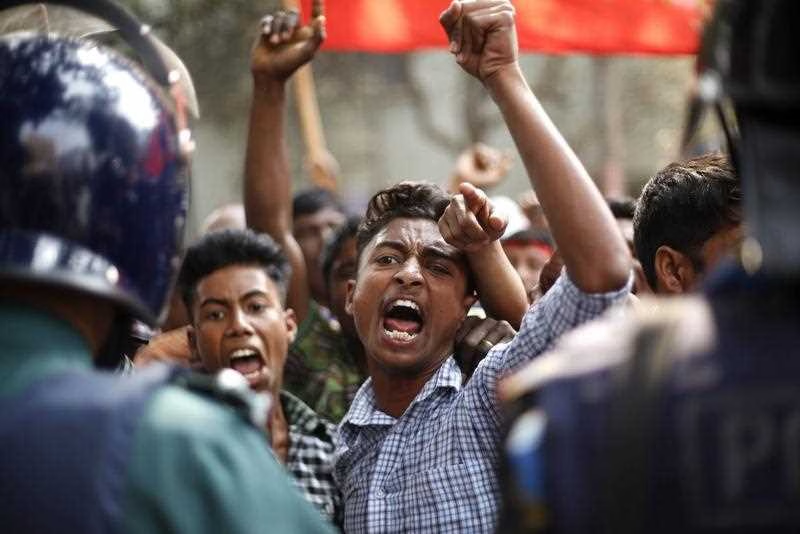
Political stability refers to the consistency, reliability, and effectiveness of a country’s governance system. Stable political environments are characterized by peaceful transitions of power, effective law enforcement, transparent institutions, and minimal civil unrest. In contrast, political instability may involve protests, conflicts, policy uncertainty, or weak governance.
For the tourism industry, stability creates a foundation of trust. Tourists need assurance that sudden policy changes, safety concerns, or administrative breakdowns will not disrupt their travel plans.
Traveler Confidence and Destination Choice
One of the most immediate effects of political stability is its impact on traveler confidence. Tourists often rely on news reports, government travel advisories, and online reviews when choosing destinations. Countries perceived as politically stable are more likely to attract consistent visitor flows.
Even isolated incidents of unrest can influence perception and deter potential travelers. Negative publicity spreads quickly, leading to cancellations and reduced bookings. Conversely, destinations known for long-term stability enjoy repeat visitors and positive word-of-mouth, supporting sustained tourism growth.
Impact on Investment and Infrastructure
Political stability encourages both domestic and foreign investment in tourism infrastructure. Investors are more willing to fund hotels, resorts, transportation networks, and entertainment facilities when policies are predictable and governance is reliable. Stable environments reduce financial risk and support long-term planning.
Well-developed infrastructure enhances the tourist experience by improving accessibility, comfort, and safety. Airports, roads, public transportation, and digital connectivity are essential components of a thriving tourism ecosystem, all of which benefit from stable political conditions.
Role of Government Policies and Regulation
Government policies directly shape the tourism landscape. Stable political systems tend to implement consistent and tourism-friendly regulations related to visas, taxation, and business operations. Simplified visa processes, transparent rules, and supportive tourism policies make destinations more attractive to international travelers.
Political instability, by contrast, often precipitates abrupt policy changes that disrupt tourism operations. Increased security measures, border restrictions, or inconsistent regulations can create uncertainty for travelers and tourism businesses alike.
Safety, Security, and Risk Perception
Safety is a primary concern for travelers, and political stability strongly influences perceptions of security. Stable countries are better equipped to maintain law and order, manage emergencies, and protect tourists. Effective policing, reliable emergency services, and clear communication systems contribute to a sense of safety.
In contrast, political unrest or conflict raises concerns about personal security. Even if tourists are not directly affected, perceived risk can significantly reduce tourism demand. Travel insurance premiums may increase, and tour operators may exclude high-risk destinations from their offerings.
International Relations and Tourism Growth
Diplomatic relationships between countries also affect tourism flows. Stable political environments foster positive international relations, leading to visa-free agreements, open travel corridors, and increased flight connectivity. These factors make travel easier and more appealing.
When diplomatic tensions arise, tourism often suffers. Travel bans, strained visa processes, and reduced airline routes limit mobility and discourage travel. Political stability supports cooperation and openness, which are essential to the growth of global tourism.
Economic Stability and Employment
Tourism thrives in economically stable environments supported by political stability. A steady economy allows governments to invest in tourism promotion, infrastructure, and workforce development. Tourism employment benefits from stable conditions, providing livelihoods for millions of people worldwide.
Political instability can disrupt tourism-related jobs and income, particularly in regions heavily dependent on visitors. Reduced tourism revenue affects local businesses, government budgets, and community development, creating long-term economic challenges.
Recovery and Resilience in Tourism
Destinations that maintain or restore political stability tend to recover more quickly from tourism downturns. Clear communication, transparent governance, and consistent policies help rebuild trust among travelers and investors. Marketing efforts emphasizing safety and stability play a key role in recovery.
Some destinations use periods of stability to diversify tourism offerings, invest in sustainable practices, and strengthen crisis management strategies. These efforts improve resilience and support long-term growth.
Conclusion
Political stability is a fundamental driver of global tourism growth. It influences traveler confidence, investment decisions, infrastructure development, and international cooperation. While tourism can adapt to changing conditions, sustained growth depends on stable governance and predictable policies. As global travel continues to expand, destinations that prioritize political stability and safety will be best positioned to attract visitors, stimulate economic development, and thrive in an increasingly competitive tourism market.