
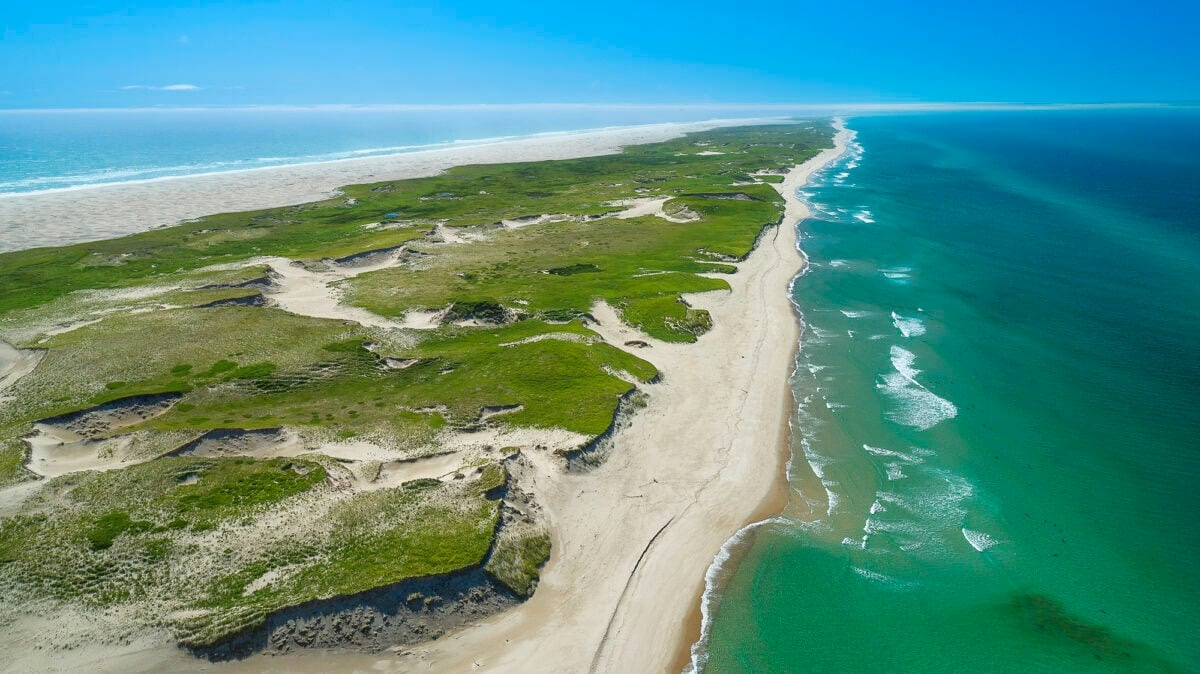
Imagine waking up one morning to discover that an entire town has vanished—not destroyed, not abandoned, but simply swallowed by nature. Roads disappear beneath water, buildings fade from view, and familiar landmarks dissolve as if they never existed. It sounds like something straight out of a fantasy novel, yet this phenomenon happens in real life. Across the world, towns and places disappear every year due to tides, weather patterns, and powerful natural forces.
These vanishing locations remind us that no matter how advanced humanity becomes, nature still has the final say.
A Village That Slips Under the Sea
One of the most famous disappearing towns is Atlantis of the North, more commonly known as Sable Island, myths or tidal villages along coastlines in Europe and Asia. In some regions, coastal towns vanish during high tides and reappear when the water retreats. These places are built in harmony with the sea—residents expect flooding as part of daily life.
In parts of France and England, tidal causeways connect islands to the mainland. During low tide, cars and people cross freely. When the tide rises, the road disappears completely, isolating the town for hours. To outsiders, it looks as though the town has vanished into the ocean.
The Spanish Town Beneath a Reservoir
One of the most haunting examples is Aceredo, a village in Spain that disappears and reappears depending on rainfall. In the early 1990s, the town was intentionally flooded to create a hydroelectric reservoir. Most years, Aceredo remains submerged, its church tower and rooftops hidden underwater.
However, during droughts, the water level drops—and the town rises from the depths. Stone walls, rusted cars, and broken staircases emerge like ghosts of the past. Former residents sometimes return to walk through the streets they once called home, making the reappearance an emotional and surreal experience.
The Lake That Swallows a City in India
In India, Shettihalli, near the Hemavati River in Karnataka, is home to a church that disappears almost every year during the monsoon season. Built in the 1860s, the church becomes submerged when the river swells, leaving only the top of its Gothic structure visible above water.
During dry months, the water recedes, revealing the full church standing alone in an empty landscape. Tourists flock to see this dramatic transformation—one season a peaceful ruin, the next a half-submerged monument. It’s a striking example of how weather cycles can make places appear and vanish repeatedly.
The Village That Melts into the Permafrost
Not all disappearing towns vanish beneath water. In parts of Siberia and Alaska, entire settlements are slowly being erased due to melting permafrost. As global temperatures rise, frozen ground turns unstable. Buildings tilt, roads collapse, and land sinks unevenly.
Some villages become unsafe to inhabit during warmer months and appear almost abandoned, only to be reoccupied when conditions stabilize. While these towns don’t vanish overnight, they are disappearing year by year—quietly erased by climate change.
The Desert City That Appears After Rain
Nature can also reveal hidden towns, not just bury them. In Australia, parts of the outback conceal old settlements that have been swallowed by sand dunes. After heavy rains, shifting sands expose foundations, wells, and even the graveyards of long-forgotten towns.
For a brief time, history resurfaces—then the desert reclaims it once again. These fleeting appearances turn the land into a living archive, where nature decides when stories are allowed to be seen.
Why Do These Towns Exist at All?
It might seem strange to build towns in places destined to disappear, but many of these locations were established long before modern understanding of tides, climate, or environmental impact. Others were built out of necessity—near water sources, fertile land, or trade routes.
In some cultures, adapting to nature’s cycles is a way of life. Homes are designed to flood. Communities plan around seasons of disappearance. What looks dangerous or impractical to outsiders is simply normal for those who live there.
A Reminder of Nature’s Power
Disappearing towns are more than just curiosities—they’re powerful reminders of humanity’s fragile relationship with the planet. As climate change accelerates, more places may begin to vanish temporarily or permanently. Rising sea levels, stronger storms, and unpredictable weather patterns are turning once-stable towns into seasonal mysteries.
Yet there is something oddly beautiful about these places. They challenge our ideas of permanence and ownership. They show that land is not fixed, and history is not always buried forever—it sometimes resurfaces, waiting to be remembered.
When the World Blinks
The towns that disappear every year feel like the world blinking—closing its eyes, then opening them again to reveal a different reality. One moment, there’s a bustling village. The next, only water, sand, or silence.
And when these places return, even briefly, they remind us of a simple truth: nature doesn’t erase us out of malice—it simply moves at its own pace.